
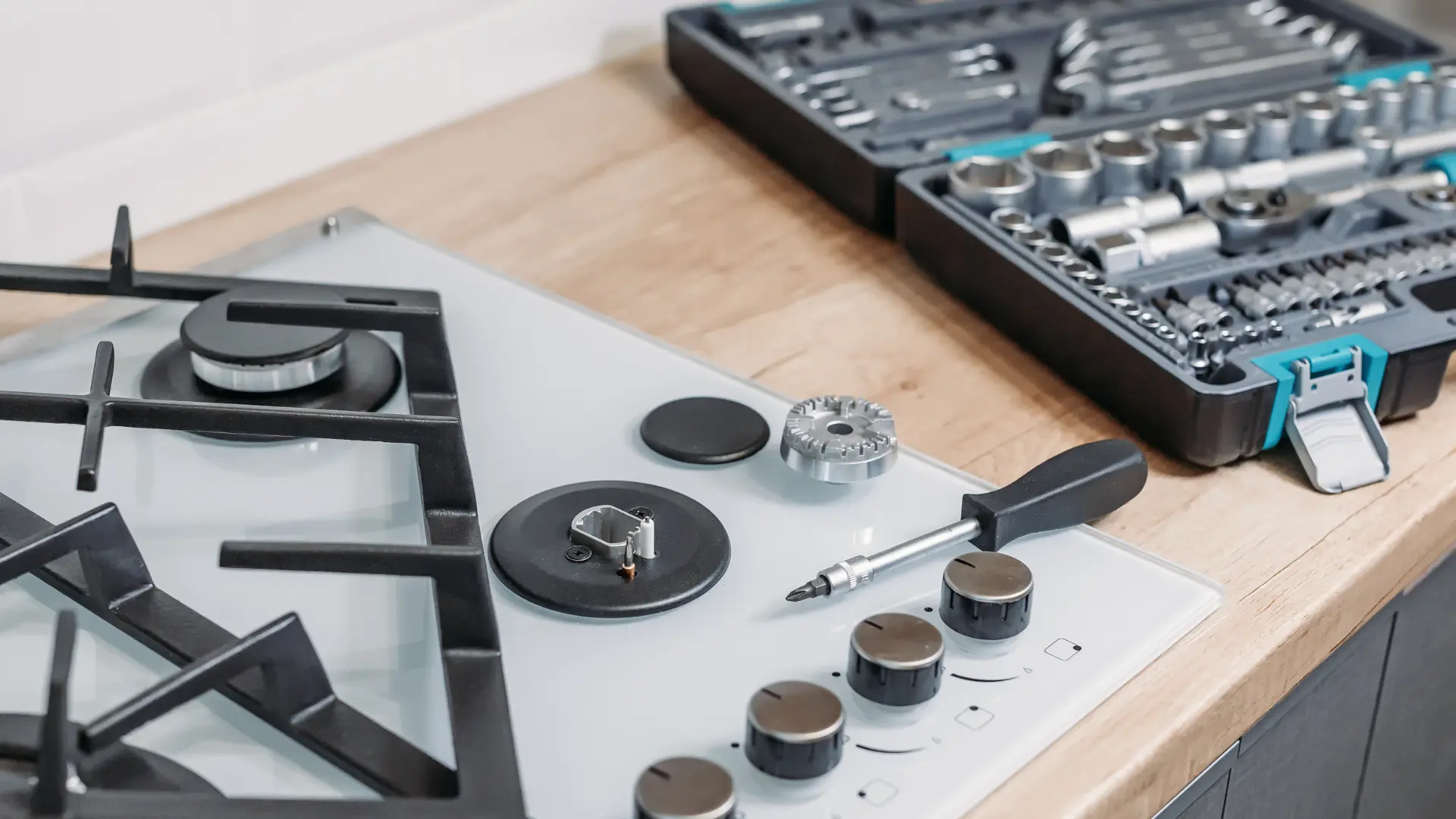
Domestic Gas Installation & Repairs
Domestic Gas Installationand Repairs Across Liverpool
Get gas appliances fitted, fixed or certified by a Gas Safe registered engineer who turns up when he says he will, so you are not left waiting in a cold house wondering if it is safe to use your own cooker.
Gas Safe registered, 4.8 stars from 45 Google reviews.
Gas Safe
Registered engineer
16 yrs
Experience, Ivan Kondov
4.8★
From 45 Google reviews
12mo
Warranty on installations
What domestic gas work covers
Domestic gas work covers anything connected to the gas supply inside a home: cookers, hobs, fires, gas boilers, and the pipework that feeds them. It is not a job for a general handyman, because a badly fitted gas fitting can leak carbon monoxide or natural gas without any obvious sign until something goes badly wrong. BLU Plumbing is Gas Safe registered and Water Regulations qualified, which covers installation, servicing, and repair of domestic gas appliances and pipework in houses and flats across Liverpool.
This service suits homeowners moving into a new property who need appliances connected, landlords who need work carried out before a tenancy starts, and anyone whose gas cooker, fire, or pipework has started playing up. It also covers straightforward jobs like capping off a redundant gas point during a kitchen refit, or extending pipework to a new appliance position.
You need a gas engineer the moment you smell gas, see a yellow rather than blue flame on an appliance, notice soot marks near a fire or cooker, or move an appliance during renovation work. Gas gives very little warning before it becomes dangerous, so these are not things to leave for a few weeks while you decide.
Professional help matters here because gas work is legally restricted to Gas Safe registered engineers, and for good reason: incorrect installation or a missed leak can cause fire, explosion, or carbon monoxide poisoning, which is fatal and hard to detect without an alarm. A properly documented job also protects you if you ever need to prove compliance to an insurer, landlord, or buyer.
Appliance installation
Cookers, hobs, gas fires and other domestic appliances connected and pressure-tested correctly.
Pipework alterations
Extending, rerouting or capping gas pipework during kitchen refits and renovations.
Fault diagnosis
Tracing leaks, poor combustion and appliance faults using proper testing equipment, not guesswork.
Compliance documentation
Paperwork you can show a landlord, insurer, or buyer that the work was done to standard.
Why gas problems get worse if you wait
Gas issues rarely stay small. A hairline leak in a joint can widen over weeks of vibration and temperature change, and a cooker running with poor combustion can slowly raise carbon monoxide levels in a kitchen without anyone noticing until someone feels drowsy or unwell. Because gas problems are largely invisible, people tend to underestimate them compared with a dripping tap or a blocked drain.
The financial risk compounds too. An uncertified gas job discovered during a house sale or insurance claim can hold up completion or void cover entirely, and ripping out unsafe pipework fitted by an unregistered installer usually costs more than doing it properly the first time.
The most common mistakes are DIY appliance connections using kits bought online, ignoring a faint gas smell because it disappears after opening a window, and using unregistered fitters who quote cheaply but leave no compliance paperwork behind.
Carbon monoxide exposure
Faulty combustion from an unserviced appliance can leak CO into a home with no smell or colour to warn you.
Invalidated insurance
Home insurers can decline gas-related claims if work was not carried out or certified by a Gas Safe engineer.
Escalating repair costs
A small leak or corroded joint left alone often damages surrounding pipework, turning a repair into a full replacement.
Failed property sales
Missing gas certification is a common reason completion dates slip during a house sale or remortgage.
Our Process
The same sequence on every job, so you know exactly what happens and when.
Step 1
Call or message us
Describe the appliance or issue and we will talk through what is likely involved before booking a visit.
Step 2
On-site assessment
We inspect the appliance, pipework and ventilation on site, which carries the £75 diagnostic fee, redeemable against the job if you go ahead.
Step 3
Fixed-price quote
Once we have seen the job we give you a fixed price, not an estimate that creeps upward once work has started.
Step 4
Installation or repair
Work is carried out to Gas Safe standards, with pressure testing and combustion checks completed before we sign it off.
Step 5
Paperwork and warranty
You receive the relevant certification for the work, and installations carry a 12-month warranty direct from BLU Plumbing.
What You Get
Fast turnaround
Most domestic gas jobs are assessed and quoted on the same visit, with work booked in within days rather than weeks.
Safety as standard
Every job includes a leak and combustion check, not just the appliance fix you called about.
Built to last
Correctly torqued joints and proper appliance seating mean fewer callbacks and longer-lasting installations.
No inflated quotes
Fixed pricing after a proper assessment means no surprise additions once the job is underway.
Dependable scheduling
We work Mon-Fri 8am-5pm and Sat-Sun 8am-2pm, so evenings and weekends are not automatically written off.
Documented peace of mind
You keep proof of compliant work, useful for landlords, buyers, and insurers alike.
Domestic gas work in detail
Materials and fittings
Domestic gas installations typically use copper pipework with compression or soldered joints, or in some cases corrugated stainless steel tubing for flexible runs behind appliances. The choice depends on the appliance, the route available, and whether the pipe will be boxed in or left visible.
Every joint is pressure tested after installation, and appliances are checked for correct gas rate and combustion once connected. Using the wrong fitting type for the pressure or gas type in a property is one of the most common causes of slow, hard-to-trace leaks.
Methods used
A typical job starts with isolating the supply, then running or altering pipework to the new appliance position, connecting the appliance, and carrying out a tightness test to confirm there is no leakage under pressure. Ventilation is checked where the appliance requires it, particularly for gas fires and older cookers.
Ongoing servicing follows a similar checklist: visual inspection, tightness test, combustion analysis, and a check of any flue or ventilation. This is the same process used for landlord gas safety checks.
Service variations
Work ranges from a single cooker swap to a full repipe during a kitchen extension. Some jobs are purely diagnostic, such as tracing an intermittent smell of gas that only appears occasionally, which needs patience and the right testing kit rather than guesswork.
When you need this service
Common triggers include moving house and needing a cooker reconnected, a kitchen renovation that moves the hob position, a gas fire that has started sooting up, or a landlord needing appliances checked before a new tenancy begins.
Residential vs commercial gas work
Domestic gas covers single dwellings and their appliances, while larger properties such as HMOs, or any catering setup, fall under different categories including ComCat 1, 2, 3 and 5 for commercial catering gas. If you run a restaurant, care home kitchen, or similar, that work sits under our commercial catering gas service rather than domestic gas.
Related services
Domestic Gas Installation & Repairs — Recent Work
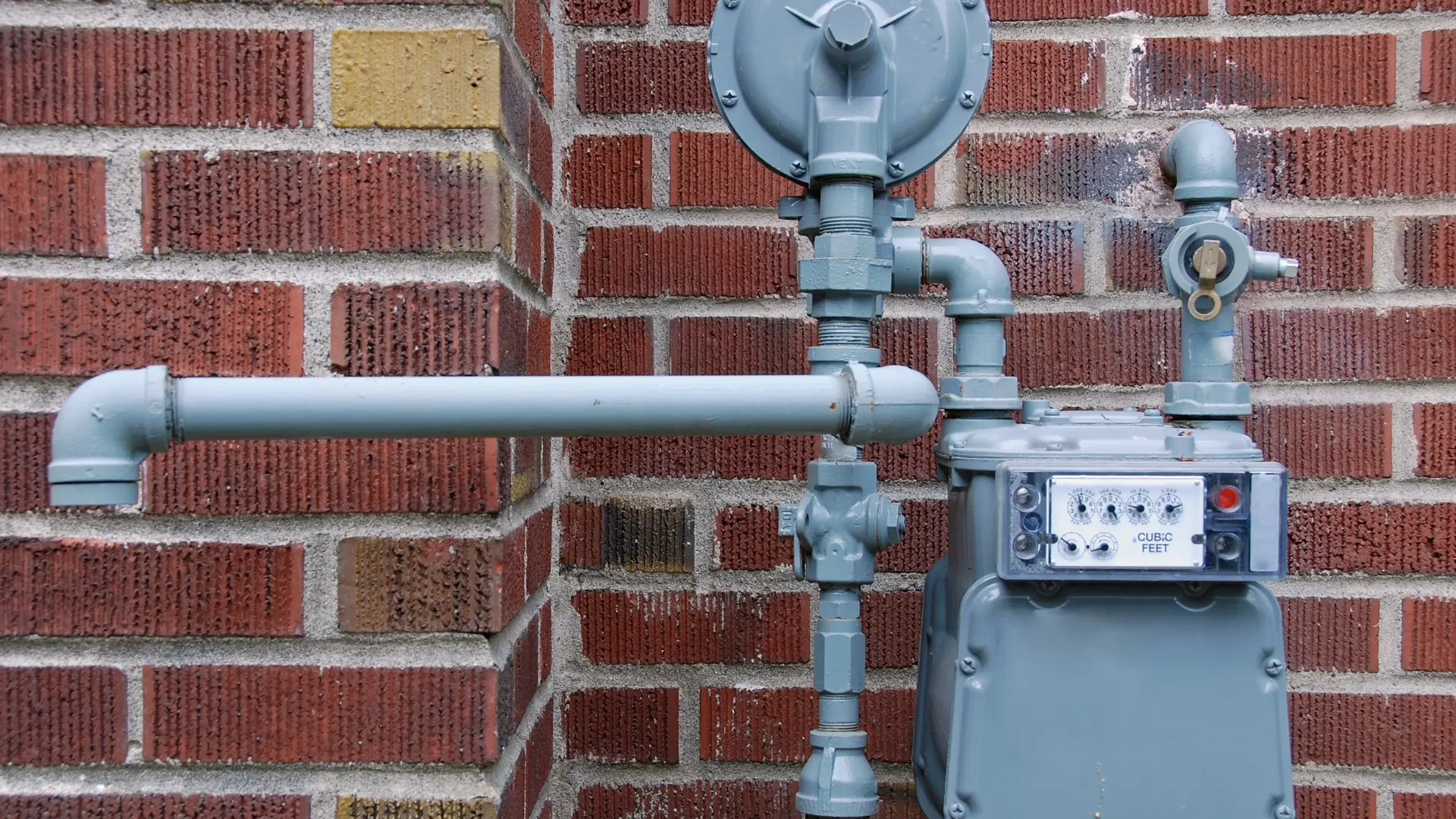
Domestic Gas Installation & Repairs — Your Questions Answered
How much does a domestic gas repair cost in Liverpool?
It depends on the fault, but every visit starts with a £75 diagnostic call-out, after which we give a fixed-price quote once the problem is confirmed. There are no surprise add-ons once work has started.
How quickly can you fit a new gas cooker?
Straightforward cooker connections are often completed on the same visit as the assessment, subject to parts and access. We will confirm timing once we have seen the job.
Are you Gas Safe registered?
Yes, BLU Plumbing is Gas Safe registered, so every domestic gas job is carried out and certified by a registered engineer.
Do I get a warranty on gas installation work?
Installations carry a 12-month warranty provided directly from BLU Plumbing, giving you cover if anything needs adjusting after the job.
What should I do if I smell gas?
Turn off the gas supply at the meter if it is safe to do so, open windows, do not use switches or naked flames, and call the National Gas Emergency Service, then book us in to find and fix the cause.
Can you provide paperwork for a landlord or insurer?
Yes, all compliant gas work comes with the relevant documentation, which you can pass to a landlord, letting agent, insurer, or buyer's solicitor.
Do you cover areas outside central Liverpool?
We regularly work across Crosby, Anfield, Everton, Bootle, Wavertree, Woolton, West Derby and Garston, alongside central Liverpool.
How long does domestic gas pipework last?
Correctly installed copper pipework can last decades, but older properties sometimes have outdated fittings that benefit from being brought up to current standards during other renovation work.
Can you fix a gas fire that has stopped lighting?
Yes, gas fire faults are a common call-out, usually down to ignition components, blocked ports, or ventilation issues, all of which we diagnose on site.
Do you offer emergency gas call-outs?
Yes, for genuine gas emergencies within 15-20 miles we aim to be on site within the hour during our operating hours.
Book a Gas Safe engineer for your home
Call 07475 056553 or email info@bluplumbing.co.uk and we will assess the job properly before quoting a fixed price.
- Free quotes; £75 diagnostic if a fault needs tracing first.
- Fixed price confirmed once the job has been seen and assessed.
- Gas Safe registered, APHC member, 4.8★ from 45 Google reviews.